 blog
7 West Centre Town Real Estate Market Review 2026 Facts
Last Updated: October 25, 2026
Quick Summary
West Centre Town is a small, tightly held neighbourhood between Little Italy and the Glebe where monthly averages swing hard on a handful of sales, so we read the market by property type and time period rather than one headline number. We track detached, townhouse and apartment-style tiers separately using median sold price, days on market and sale-to-list ratio.
- Median sold price resists distortion from one unusually expensive home, unlike the average.
- A sale-to-list ratio at or above 100 percent means homes sell at or above asking.
- Townhouses are the highest-turnover segment and the best read on buyer demand.
- Watch new listings weekly, since a handful can shift months of supply noticeably.
- Overpricing costs you the first two weeks of exposure, when buyer attention is highest.
Table of Contents
- West Centre Town Real Estate Market Review 2026: What the Data Shows
- West Centre Town Home Prices 2026: Average, Median, and List-to-Sold
- West Centre Town Days on Market and Sale-to-List Ratio
- Property-Type Breakdown: Detached, Townhouse, and Apartment-Style Sales
- How West Centre Town Compares With Nearby Ottawa Neighbourhoods
- West Centre Town Real Estate Market Forecast for the Rest of 2026
- Selling a Home in West Centre Town: Pricing and Preparation in 2026
- Book a Discovery Call Before Your Next West Centre Town Move
- Frequently Asked Questions
West Centre Town Real Estate Market Review 2026: What the Data Shows
A West Centre Town real estate market review in 2026 starts with one honest admission: this is a small, tightly held neighbourhood, so monthly averages swing hard on a handful of sales.
Here is what most market updates get wrong. They report a single average price and call it a trend.
Below, we break down prices, days on market, and what the rest of 2026 looks like. For a live local example, you can view a West Centre Town listing that shows what current inventory actually looks like.
Here are the key facts about how this small, tightly held neighbourhood is measured.
| Item | Value | Note |
|---|---|---|
| Location | Between Little Italy and the Glebe | Walking distance to Dow's Lake and Rideau Canal |
| Market trait | Monthly averages swing hard on a handful of sales | One detached sale can move the average by tens of thousands |
| Property tiers tracked | Detached, townhouse, apartment-style | Tracked separately each month |
| Price reading | Median sold price | Resists distortion from one unusually expensive home |
| Negotiation signal | Median list versus median sold price | Watch monthly, not yearly |
| Demand read | Days on market | Fastest read on buyer demand |
| Sale-to-list ratio | At or above 100 percent | Homes selling at or above asking |
| Agent | Franco Ippolito : EXP REALTY | Nearly four decades of Ottawa experience since 1987 |
West Centre Town Home Prices 2026: Average, Median, and List-to-Sold
West Centre Town home prices in 2026 vary sharply by property type, and the median tells you more than the average. Median sold price is the middle sale in a set, so it resists distortion from one unusually expensive home.
Average and median sale price by property type
Detached homes in the neighbourhood command the highest figures, townhouses sit in the middle, and apartment-style properties trade lowest. Rather than quote a single number that will be stale by the time you read it, we track these three tiers separately against Ottawa Real Estate Board market data each month.
Median list price versus median sold price
The gap between median list price and median sold price is your negotiation signal. When sold prices sit below list, buyers have room. When they meet or exceed list, competition is real. Watch this ratio monthly, not yearly.
West Centre Town Days on Market and Sale-to-List Ratio
Days on market measures how long a property takes to sell, and it is the fastest read on buyer demand.
Two numbers, one conclusion: watch them together. A short days-on-market figure paired with a strong sale-to-list ratio signals a seller's market in that property type. Long days on market with a weak ratio signals the opposite. Neither number means much alone.
Property-Type Breakdown: Detached, Townhouse, and Apartment-Style Sales
The three property types here behave like three different markets, and they clear at different speeds, different price bands, and different buyer profiles.
Why the split matters more here than citywide
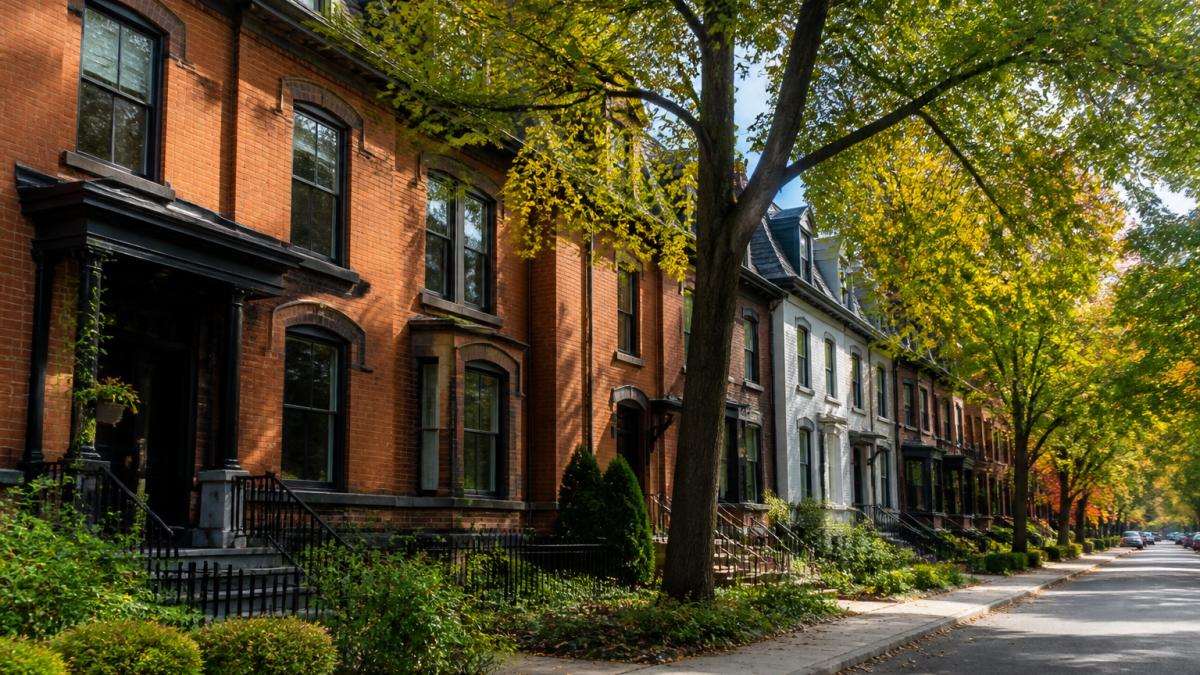
West Centre Town's housing stock is not uniform. The detached inventory is largely older brick stock on narrower lots, often with limited parking and heritage-adjacent constraints.
That mix means a single "average" is close to meaningless. A month with two detached sales and six townhouse sales will report an average that describes neither segment well. Read each tier separately against Ottawa Real Estate Board market data and against the same tier in the prior month.
How to read each tier
- Detached: Lowest transaction count, widest price dispersion. Condition, lot width, and parking drive the spread more than square footage. Expect longer days on market and more negotiation room than the townhouse tier when inventory is normal.
- Townhouse (freehold and stacked): The highest-turnover segment and the best read on buyer demand. Sale-to-list ratios here move first when the market shifts, because the buyer pool is deepest and most rate-sensitive.
- Apartment-style and condominium: Fee structure, reserve fund health, and status certificate review matter as much as the unit itself. Two units in the same building can trade at very different prices depending on exposure, parking, and locker.
A like-for-like method you can repeat
- Pull sold data for the last 90 days, filtered to the property type and a consistent size band.
- Compare median sold price, not average, to blunt the effect of one outlier.
- Track days on market and sale-to-list ratio for the same tier month over month.
- Compare the result with the adjacent neighbourhood's same tier, not with the citywide average.
That method is what separates a real neighbourhood review from a headline number. If you want to see how these tiers look in practice, explore a triplex listing in the neighbourhood to compare an income property against a single-family purchase, and use the broader Ottawa market update only as background context, not as a substitute for the local tier data.
How West Centre Town Compares With Nearby Ottawa Neighbourhoods
Compare West Centre Town with the Glebe and you are comparing price points, not lifestyles. Both offer central living and Canal access.

Hintonburg and Little Italy sit nearby and attract a similar buyer profile, with a mix of older homes and newer infill. Barrhaven, further out, trades central convenience for newer construction and larger lots.
The comparison only works like-for-like. Match property type, age, and lot size before you draw conclusions, and check the broader Ottawa market update to see how citywide conditions frame these neighbourhood differences.
West Centre Town Real Estate Market Forecast for the Rest of 2026
Most forecasts for this neighbourhood are really Ottawa forecasts with a local label. This one is different: it is built on a defined methodology, transparent time periods, and the variables that actually move a small, tightly held market. We are not predicting a number. We are giving you a framework you can update yourself each month.
The methodology, stated plainly
We track three things for West Centre Town, by property type, on a rolling basis:
- Inventory: active listings and new listings, measured month over month and against the same month last year.
- Absorption: months of supply, calculated as active listings divided by average monthly sales for the trailing three months.
- Price direction: median sold price and sale-to-list ratio, compared year over year rather than month over month, because monthly samples here are too small to be reliable.
A forecast that does not state its time period and its sample is not a forecast, it is an opinion. Ours is designed to be checked.
What the rest of 2026 hinges on
Three variables matter more than any headline:
- New listing flow. In a neighbourhood this small, a handful of new listings can shift months of supply noticeably. Watch new listings weekly, not quarterly.
- Interest rates and financing. Townhouse buyers are the most rate-sensitive segment here, so mortgage pricing feeds directly into sale-to-list ratios in that tier.
- Seasonality. Winter sales are typically thinner, spring brings the deepest buyer pool, and fall settles into a steadier rhythm. Seasonal patterns are not a forecast on their own, but they change how you read a single month's data.
Affordability and carrying costs, the gap most reviews skip
Headline sale prices tell you what a home costs. They do not tell you what owning it costs. Before you set a budget, model the full picture:
- Mortgage payment: use current posted rates and stress-test at a higher rate to see whether the payment still works.
- Property taxes: confirm the assessment and the current mill rate for the property, not the neighbourhood average.
- Condominium fees: for apartment-style units, review the status certificate, reserve fund, and any special assessments.
- Insurance and utilities: older detached stock often carries higher heating and maintenance costs than newer townhouses.
A common pattern is for buyers to qualify on the purchase price and then discover the carrying cost leaves no room for maintenance. Model it before you make an offer.
Rental and investor considerations
Sales data dominates most reviews, but this neighbourhood also attracts investors. Rental supply, achievable rents, and indicative gross yields vary by property type, a triplex and a one-bedroom condominium are different investments with different risk profiles. Review the tenancy rules under Ontario's Residential Tenancies Act before you underwrite a purchase, and confirm zoning and licensing requirements with the City of Ottawa. For the wider outlook, read our Ottawa 2026 trends and forecast.
Selling a Home in West Centre Town: Pricing and Preparation in 2026
Realistic pricing wins in this market, full stop. Overpricing a West Centre Town home in 2026 costs you the first two weeks of exposure, when buyer attention is highest.
Preparation matters just as much. Our advice on how to avoid overpaying for homes in Ottawa applies in reverse to sellers: know what the numbers support before you set a price.
Best for: Sellers who want a pricing strategy grounded in property-type data. Skip if: You are testing the market with no intention of selling this year.
Book a Discovery Call Before Your Next West Centre Town Move
The West Centre Town market rewards preparation over guesswork. Whether you are buying your first home, upgrading, downsizing, or adding an investment property, the numbers only help if someone reads them with you.
At Franco Ippolito : EXP REALTY, we bring nearly four decades of Ottawa experience since 1987, a business built almost entirely on repeat clients and referrals, and a hands-on approach to every transaction. We combine old-school client care with modern, strategic marketing and strong negotiation.
Get started with Franco Ippolito : EXP REALTY and make your next West Centre Town move with clear data behind it.
Frequently Asked Questions
How is the West Centre Town real estate market performing in 2026?
West Centre Town is tracking with the broader Ottawa market in 2026: a balanced market where supply and demand sit closer together than in the tightest years. Detached homes and townhouses move faster than apartment-style condos, and sale-to-list ratios show less room for overpricing than sellers saw during the peak. Months of inventory, new listings, and year-over-year changes are the three numbers worth watching each month. Ask for a current market update before you price or offer.
How long does it take to sell a home in West Centre Town?
Days on market in West Centre Town varies by property type. Detached homes and well-priced townhouses typically sell faster than apartment-style condos, which can sit longer because buyers have more choice in that segment. Seasonal trends matter too: winter sales are slower and spring brings more buyer demand. A realistic list price and proper preparation shorten days on market more than any marketing tactic, so review recent comparable sales before you list.
Is 2026 a good time to buy a home in West Centre Town?
For buyers, 2026 offers more negotiating room than the bidding-war years. Housing inventory is healthier, sale-to-list ratios are closer to asking, and you can often include conditions that protect you on financing and inspection. The trade-off is that well-priced detached homes and townhomes still attract competition. Get a mortgage pre-approval, study months of inventory for your target property type, and budget for ownership costs beyond the purchase price.
Should I sell my West Centre Town home now or wait?
That depends on your timeline and property type. If you own a detached home or townhouse in a segment with low inventory, buyer demand is steady and a spring listing can work well. Apartment-style condo owners face more competition and should plan a sharper pricing strategy. Waiting has a cost too: carrying costs, and the risk that new supply changes your segment. A discovery call can walk through your specific street, property type, and timing before you commit.