 How-to
Investing in Ottawa Rental Properties for Beginners
Last Updated: November 21, 2026
Quick Summary
Investing in Ottawa rental properties for beginners works best by targeting steady tenant demand from government, universities, and hospitals, then running cash flow numbers before making an offer. Ottawa rental demand stays strong because housing supply has not kept pace, but you must budget for condo fees, taxes, vacancy, and closing costs.
- Ottawa rental demand rests on government employment, universities, and hospitals, which creates a stable tenant base.
- Downtown condos suit first purchases, while suburban townhomes attract families and longer leases.
- Lenders base qualifying income on an adjusted rent figure that is usually lower than actual rent collected.
- On a $500,000 purchase, a 20 percent down payment is $100,000 before closing costs and reserves.
- Stress-test each deal against a higher rate, two vacant months, and a one-time repair before committing.
Table of Contents
- Why Ottawa Rental Properties Attract First-Time Investors
- The Best Ottawa Neighborhoods for Rental Properties
- Rental Property Financing in Ottawa: What Beginners Need to Qualify
- Ottawa Rental Property Expenses and Closing Costs to Budget For
- How to Calculate Ottawa Rental Property Cash Flow Before You Buy
- Ontario Landlord Rules and Tax Records Beginners Must Set Up
- A Step-by-Step Purchase Timeline and Due Diligence Checklist
- Book a Discovery Call Before You Make Your First Offer
- Frequently Asked Questions
Why Ottawa Rental Properties Attract First-Time Investors
Investing in Ottawa rental properties for beginners starts with one fact: this city rents to people who rarely leave.
Government offices, two major universities, and a cluster of hospitals create steady tenant demand that does not vanish in a slow economy.
Ottawa rental demand rests on three pillars:
- Government employment: federal offices anchor whole downtown blocks.
- Universities: student turnover creates a fresh tenant pool each year.
- Hospitals: staff, residents, and travelling nurses need housing near work.
Housing supply has not kept pace with that demand. New builds take years to approve and finish.
You can check current market conditions through the Canada Mortgage and Housing Corporation rental market reports before you commit. Our Ottawa Real Estate Market: 2026 Trends & Forecast breaks down demand and rent outlook.
Steady Tenant Demand From Government, Universities, and Hospitals
Demand from these three groups is less tied to boom-and-bust cycles. A federal worker relocating to the city needs a lease, not a lifestyle upgrade.
Universities bring a wave of leases every spring and fall. Hospitals bring longer stays from staff and contract workers. Together they fill everything from one-bedroom condos to family townhomes.
Housing Supply Constraints and What They Mean for Rents
Supply constraints are the quiet engine behind Ottawa rental returns. When fewer units come to market, vacancy stays low and landlords hold pricing power.
Fewer units also means more competition among tenants, good for a landlord up to a point. Push rents too hard and good tenants walk. Price at market, not above it.
The Best Ottawa Neighborhoods for Rental Properties
The best Ottawa neighborhoods for rental properties are those closest to where tenants actually work and study. Location does more for cash flow than any renovation.
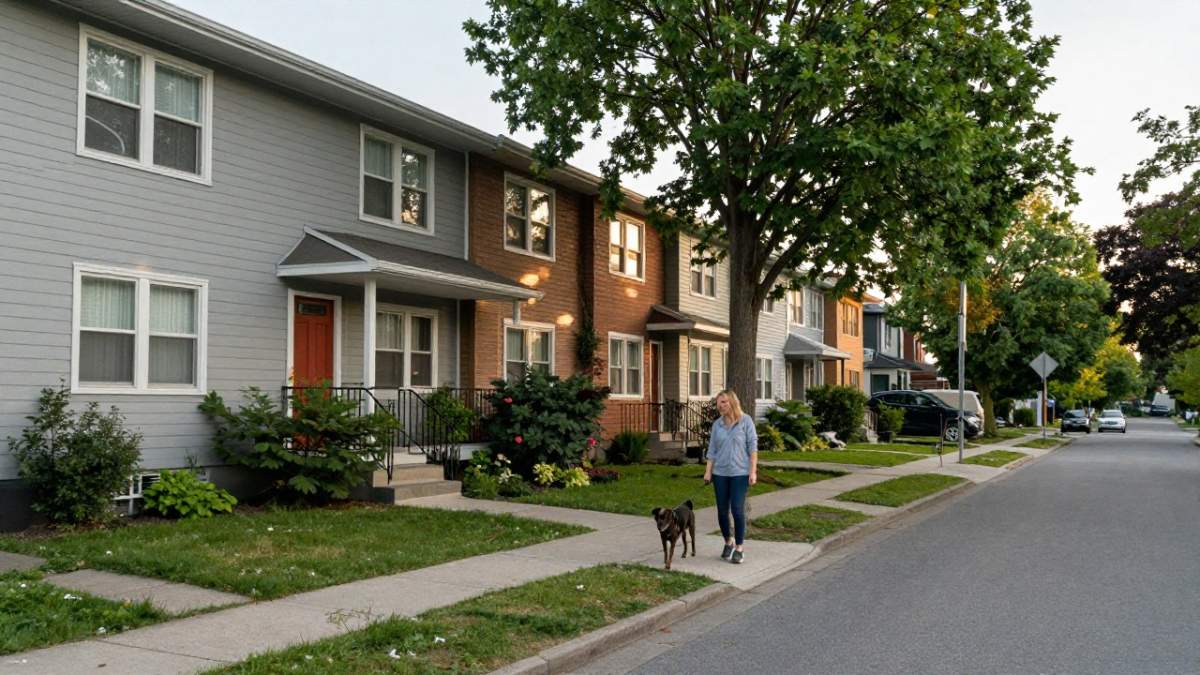
Condos Downtown Versus Townhomes in the Suburbs
| Property Type | Best For | Watch Out For |
|---|---|---|
| Downtown condo | First purchase, quick rental | Condo fees, rental caps |
| Suburban townhome | Families, longer leases | Higher entry price |
| Multi-unit building | Higher income, scale | Bigger down payment |
Condo fees affect cash flow, and some buildings limit how many units can be rented. Check both before you buy.
Rental Property Financing in Ottawa: What Beginners Need to Qualify
Rental property financing in Ottawa depends on your down payment, your income, and how lenders view rental income. Expect a larger down payment than for your own home, and expect the lender to underwrite the property almost like a small business.
Lenders generally treat rental properties as a higher-risk loan. A lender will typically want:
- A down payment larger than the minimum for an owner-occupied home.
- Proof of rental income or a realistic rent estimate.
- A clean credit history and stable employment.
How Lenders Actually Count Rental Income
This is where most beginners get surprised. Lenders do not simply add the full monthly rent to your income.
The lender is testing whether the property can carry itself if rent drops or a unit sits empty.
Watch out: a rent estimate that looks fine to you can be trimmed by the lender's allowance, so run your own numbers with a vacancy buffer before you assume you qualify.
Minimum Down Payment Rules for a Rental Purchase
Down payment rules differ between an owner-occupied home and a rental. Down payment rules for a rental purchase are generally stricter than for an owner-occupied home.
On a $500,000 purchase, a 20 percent down payment is $100,000. Add closing costs and a reserve fund, and the cash you need at the start is meaningfully higher than the down payment alone.
The Stress Test and the Qualifying Rate
Even if your contract rate is lower, the lender qualifies you at a higher stress-test rate to confirm you could still carry the payments if rates rose. For a rental, the stress-tested payment is compared against the adjusted rental income, not the full rent.
To prepare, calculate your mortgage payment at the stress-test rate, add property taxes, insurance, condo fees, and a vacancy allowance, and compare that total to realistic rent.
Documentation a Beginner Should Have Ready
Lenders move faster when the file is complete. Have these ready before you shop:
- A mortgage pre-approval, so you know your borrowing range.
- Proof of down payment, including source of funds.
- Recent pay stubs, notices of assessment, and employment letters.
If you do not fit a traditional lender's box, alternatives exist. Our guide to alternatives to traditional mortgage lenders in Ottawa covers the options beginners often miss.
Ottawa Rental Property Expenses and Closing Costs to Budget For
Ottawa rental property expenses go well beyond the purchase price. Beginners who budget only for the down payment run short at closing.
Plan for these costs:
- Land closing costs: land transfer tax, legal fees, title insurance, and inspection.
- Ongoing costs: property taxes, insurance, condo fees, maintenance, and repairs.
- Vacancy buffer: set aside funds for empty months between tenants.
For a full line-by-line breakdown, see how to calculate closing costs for Ottawa homes. Then read how to estimate the hidden costs of buying a home in Ottawa to catch the items most first-timers miss.
How to Calculate Ottawa Rental Property Cash Flow Before You Buy
Ottawa rental property cash flow tells you whether a deal works before you sign. Run the numbers on paper, on a realistic rent rather than the best-case listing.
Use this formula:
Monthly rent - (mortgage + taxes + insurance + condo fees + maintenance + vacancy buffer) = cash flow
If the result is positive, the property pays for itself. If it is negative, you are covering the gap from your own pocket, workable for capital appreciation, but only if you can afford the monthly shortfall.
A Worked Example on a Sample Ottawa Condo
Here is how a beginner can lay out a deal.
| Line item | Monthly amount |
|---|---|
| Rent | $2,100 |
| Mortgage payment | -$1,900 |
| Condo fees | -$450 |
| Property taxes | -$250 |
| Insurance | -$40 |
| Maintenance reserve | -$150 |
| Vacancy allowance | -$175 |
| Net cash flow | -$865 |
A property can be cash-flow negative and still be a reasonable purchase, but the buyer would be funding a monthly shortfall and relying on rent growth and appreciation.
Watch out: condo fees and property taxes are the two lines beginners most often underestimate, and both rise over time.
The Expense Lines Beginners Forget
A cash-flow spreadsheet is only as good as its expense lines. Include these:
- Property taxes: confirm the current assessment, not last year's estimate.
- Insurance: landlord policies cost more than owner-occupied policies.
- Condo fees: check the status certificate for special assessments and planned increases.
Stress-Testing the Deal
A single cash-flow number hides risk. Run three scenarios before you commit:
- Higher rate: recalculate the mortgage payment at a rate one to two percentage points above your contract rate.
- Vacancy: model two empty months instead of one.
- Repair shock: add a one-time repair such as a furnace or appliance replacement and see whether your reserve covers it.
If the deal only works in the best-case scenario, it is not a beginner deal. If it survives all three, you have a margin of safety.
Self-Management Versus Hiring a Manager
Cash flow also depends on who runs the property. Self-managing saves the management fee but costs your time for showings, repairs, and tenant communication.
For a full line-by-line breakdown of the costs around a purchase, see how to calculate closing costs for Ottawa homes. Then read how to estimate the hidden costs of buying a home in Ottawa to catch the items most first-timers miss.
Ontario Landlord Rules and Tax Records Beginners Must Set Up
Ontario landlord rules are not optional, and they are not intuitive. Learn them before your first tenant moves in.
The Landlord and Tenant Board handles disputes between landlords and tenants. Know the rules on rent increases, notices, and evictions before you need them.
Set up your records early:
- Keep every receipt for repairs, fees, and utilities.
- Track rental income and expenses by property.
- Store lease agreements and notices in one place.
The Canada Revenue Agency guidance on rental income explains what counts as income and what you can claim.
A Step-by-Step Purchase Timeline and Due Diligence Checklist
A first rental purchase moves through clear stages. Here is the timeline we walk beginners through.
- Set your budget. Confirm your down payment and financing.
- Pick a neighborhood. Match it to your target tenant.
- Run the cash flow numbers. Use real rent estimates, not guesses.
- Make an offer. Negotiate with the full cost picture in mind.
- Do due diligence. Inspect the unit, review condo documents, and check rental rules.
- Close and prepare. Set up records and get the unit rent-ready.
Use this checklist before you commit:
- Down payment confirmed with a lender
- Rent estimate checked against nearby listings
- Condo fees and rental caps reviewed
Watch out: skipping the condo document review can leave you owning a unit you are not allowed to rent. Read the rules first.
Book a Discovery Call Before You Make Your First Offer
Your first rental purchase sets the tone for everything after it. A steady tenant base and tight supply make Ottawa a strong place to start, but the deal still has to work on paper.
Franco Ippolito : EXP REALTY brings nearly four decades of Ottawa real estate experience to that first offer. We combine traditional client care with modern, strategic marketing. We help you read the numbers, check the rules, and negotiate with confidence.
Get started with Franco Ippolito : EXP REALTY and make your first rental purchase a smart one.
Your first offer deserves a second set of eyes. We will review the property, the cash flow, and the risks with you before you commit.
Frequently Asked Questions
Is Ottawa a good place to invest in rental property?
Ottawa has several features that suit first-time landlords: steady tenant demand from government employment, universities, and hospitals, plus housing supply that has not kept pace with demand. That combination supports occupancy and rents over time. It does not guarantee positive cash flow on every property, so run the numbers on each deal. A condo with high fees can lose money even in a strong rental market, while a townhome with a basement unit may cash flow. Treat the market as a tailwind, not a substitute for due diligence.
How much money do you need to buy a rental property in Ottawa?
Plan for a down payment plus closing costs. Lenders typically require a larger down payment on rental purchases than on a primary residence, and mortgage loan insurance rules differ for rentals, so confirm the current requirement with a mortgage broker. On top of the down payment, budget for land transfer tax, legal fees, an inspection, and a reserve for the first vacancy and any immediate repairs. Ask your broker for a written cost estimate before you start viewing properties.
How do you calculate Ottawa rental property cash flow?
Take the monthly rent you can realistically charge, subtract a vacancy allowance, then subtract every operating cost: mortgage interest, property taxes, insurance, condo fees, maintenance, repairs, and property management if you use it. What remains is your cash flow. Use conservative rent and a vacancy allowance rather than a best-case scenario. If the property only works with zero vacancies and no repairs, it does not work. Run the same calculation at a higher interest rate to stress test the deal.
What rules should landlords understand before renting out a property in Ontario?
Ontario landlords work under the Residential Tenancies Act, which governs leases, rent increases, notices, and eviction procedures. Learn the standard lease form, the annual rent increase guideline, and the rules for entering a unit and handling deposits before you list. Keep records of every notice and payment. Mistakes in paperwork are the most common reason landlords lose at the Landlord and Tenant Board. A local property manager or a real estate lawyer can review your process before your first tenant moves in.