 ultimate-guide
Homes for Sale in Kanata, Ontario: 2026 Buyer's Guide
Table of Contents
- Homes for Sale in Kanata, Ontario: What Buyers Need to Know
- How to Search Kanata Listings and Read Them Like an Agent
- Kanata Homes for Sale by Neighborhood
- Kanata Townhouses for Sale: What to Expect
- Kanata Condos for Sale: Low-Maintenance Options
- Kanata Home Buying Guide: From Search to Closing
- Conclusion
- Frequently Asked Questions
Last Updated: October 18, 2026
Homes for Sale in Kanata, Ontario: What Buyers Need to Know
Shopping for homes for sale Kanata in Ontario means competing in one of Ottawa's most established suburban markets, where tech-sector employment, mature trees, and a mix of postwar and newer housing create distinct micro-markets.
Kanata is not one market but a collection of communities, each with its own price band, housing stock, and buyer profile. Treating a Kanata Lakes detached home and a Marchwood townhouse as comparable because they share a postal code is the most common mistake we see.
How to Search Kanata Listings and Read Them Like an Agent
Set filters for property type, price band, and neighbourhood, then layer map search on top to check proximity to transit corridors and schools. Narrow first, expand later.
Filters, Map Search, and Saved Alerts That Actually Help
Set filters to match your non-negotiables: bedroom count, property type, and a price ceiling stress-tested against your financing. Use map search to draw boundaries around specific streets, since listing feeds often lump adjacent communities together. Save the search with email alerts so new listings reach you the day they hit the MLS listing system.
A practical filter stack for this market looks like this:
- Property type first. Detached, freehold townhouse, condo townhouse, and apartment condo behave as separate markets with different negotiation dynamics. Mixing them in one search produces noise.
- Price band second. Set a ceiling, not a floor. A floor filter hides the relisted and reduced properties where the best negotiation room usually sits.
- Neighbourhood third. Draw map boundaries around the pockets you have shortlisted rather than filtering by city name, which pulls in every community at once.
What Listing Photos and Property Details Really Tell You
Listing photos are marketing, selected to hide weaknesses. Look past the staging and check the property details for what the photos avoid: roof and furnace age, lot dimensions, listing status, and price history. A home relisted or price-dropped more than once is telling you something: a property that started high and stepped down is usually a motivated seller, while one unchanged for weeks in a fast-moving pocket may have a condition issue worth investigating before you view.
How Listing Status and Data Freshness Actually Work
Listing data is a snapshot, not a live feed. A property can show as active while an offer is already under consideration, and sold or conditionally sold status can lag. Treat any portal as a starting point and confirm status directly before you view or write an offer.
The status labels you will see most often mean different things:
- Active, the seller is accepting offers, but that does not mean no offer is on the table.
- Conditionally sold, an offer has been accepted subject to conditions such as financing or inspection. The property can return to active if a condition fails, so it is worth a follow-up rather than a write-off.
- Sold, the transaction has firmed up. Portals sometimes keep sold listings visible for weeks, which can make inventory look larger than it is.
Buyers often chase a listing that is already conditionally sold because the portal has not refreshed.
Verifying a Listing Before You Act
Three checks catch most listing surprises:
- Confirm the status and offer date. Some sellers set a specific date to review offers, which changes your timeline entirely.
- Pull the price history and days on market. A long stretch on market in a pocket where homes usually move quickly is a signal to ask why.
- Cross-check the property details against the listing photos. Missing room photos, cropped exterior shots, or a floor plan that does not match the room count are worth a direct question before you view.
Reading Between the Lines on Property Details
The property details section holds the useful facts: year built, heating and cooling type, lot dimensions and shape, parking, and whether the listing mentions a survey or pre-listing inspection.
If a listing includes a floor plan, compare room dimensions to the photos. Wide-angle photography makes rooms look larger than they are, and a floor plan is the more honest measure of whether your furniture will fit.
Kanata Homes for Sale by Neighborhood
Kanata's communities differ sharply in housing stock, lot size, and price band, so the neighbourhood you choose shapes your budget and daily routine more than any single property feature.

Kanata Lakes, Marchwood, and Morgan's Grant
Kanata Lakes is the established, higher-demand pocket, known for larger detached homes, mature landscaping, and proximity to the Kanata North tech park. Marchwood offers townhouses and detached homes at a lower entry point, popular with first-time buyers. Morgan's Grant sits in the north end with a family reputation and a blend of newer builds and townhouse clusters. Expect the most competition in Kanata Lakes, where well-presented detached homes move quickly.
Kanata North, Kanata Estates, and Dunrobin
Kanata North is the tech-employment hub, keeping rental demand and buyer interest steady. Kanata Estates appeals to buyers wanting larger lots and more space between neighbours. Dunrobin, on the rural western edge, offers acreage and privacy for buyers who accept a longer commute. These three are not interchangeable, and pricing reflects the difference in lot size and setting.
| Neighbourhood | Typical Housing | Best For | Watch For |
|---|---|---|---|
| Kanata Lakes | Detached homes, larger lots | Move-up buyers, families | Fast competition, higher asking prices |
| Marchwood | Townhouses, some detached | First-time buyers | Smaller lots, older mechanicals |
| Morgan's Grant | Newer builds, townhouse clusters | Growing families | Check builder warranty transfer |
| Kanata North | Mixed, close to tech park | Commuters, investors | Traffic at peak hours |
| Kanata Estates | Larger lots, detached | Buyers wanting space | Fewer listings at any one time |
| Dunrobin | Acreage, rural properties | Privacy seekers | Well, septic, and commute checks |
Kanata Townhouses for Sale: What to Expect
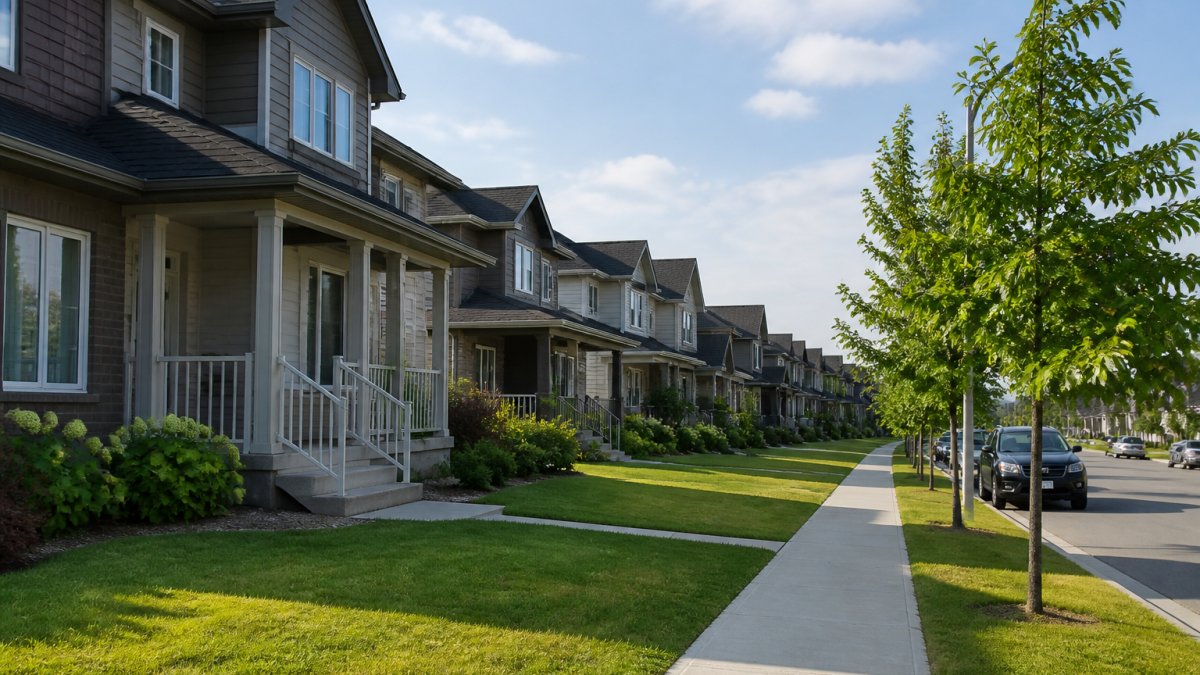
Townhouses are the most accessible route into Kanata ownership, in three forms: freehold, condo townhouse, and stacked. Freehold townhouses carry no monthly condo fee but put all exterior maintenance on you.
Check the status certificate on any condo townhouse before you commit. It reveals the reserve fund balance, any special assessments planned, and whether the corporation is financially healthy. A low fee with a depleted reserve fund is a future bill in disguise.
Kanata Condos for Sale: Low-Maintenance Options
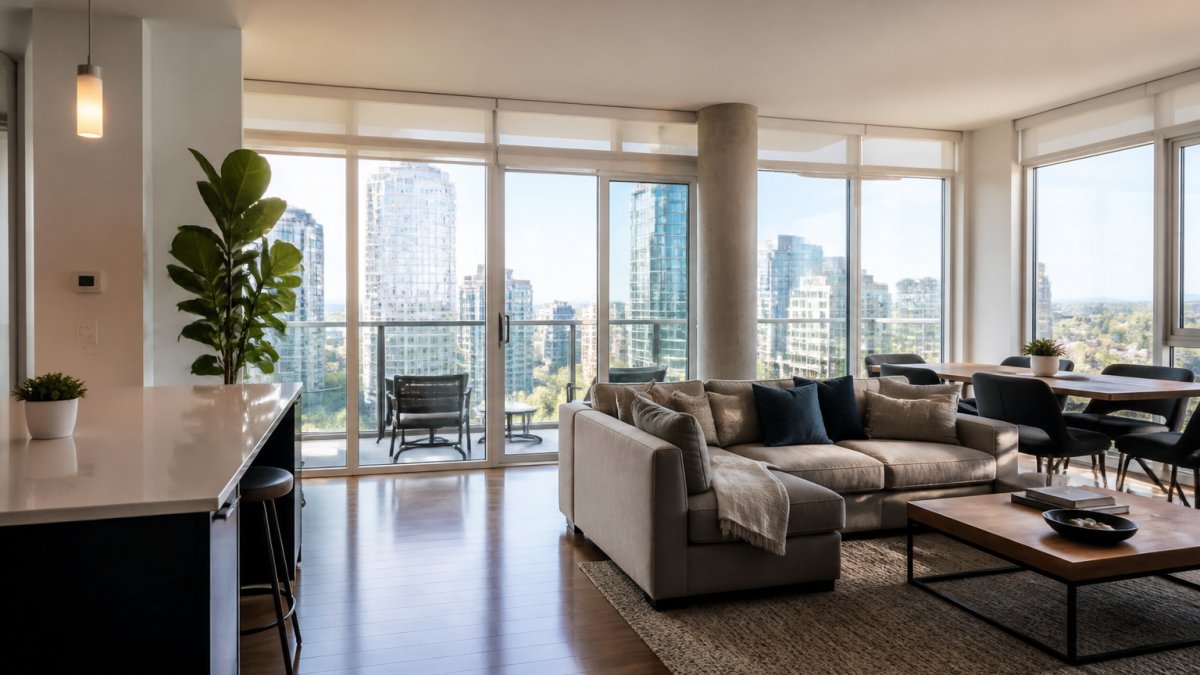
Condos suit buyers who want low-maintenance ownership, whether downsizers, professionals, or investors. In Kanata, condo options cluster around the Centrum area and near transit corridors, giving easy access to shopping and commuter routes.
Compare condo fees per square foot rather than in absolute terms, and ask what the fee covers. A fee that includes heat, water, and building insurance is not comparable to one that covers only common elements.
Kanata Home Buying Guide: From Search to Closing
The buying process follows the same broad sequence as anywhere in Ontario, but the local market rewards preparation. Get financing pre-approved before you view, because strong listings here do not wait for buyers still arranging a mortgage.
Budgeting for the Total Cost of Ownership
Your budget is more than the purchase price. Build in Ontario land transfer tax, legal fees, a home inspection, title insurance, and moving costs, then add ongoing costs: property taxes, utilities, insurance, and any condo fees. For older homes, set aside a maintenance reserve for the roof, furnace, and windows.
One-time costs at closing
- Ontario land transfer tax. This is calculated on a graduated scale based on the purchase price (Calculating Land Transfer Tax | Land Transfer Tax). First-time buyers may qualify for a rebate, so confirm eligibility with your lawyer before you finalize your budget.
- Legal fees and disbursements. A real estate lawyer handles title search, registration, and the transfer. Ask for a written estimate that includes disbursements, not just the base fee.
- Home inspection. A pre-offer or pre-closing inspection is a modest cost relative to the repair risk it uncovers, especially on older homes.
Ongoing costs
- Property taxes. Confirm the current assessment and the annual tax bill for the specific property rather than relying on a neighbourhood average.
- Utilities. Heating, hydro, and water costs vary with the home's age, insulation, and system type. Ask for recent utility bills where the seller will share them.
- Insurance. Premiums depend on the home's age, construction, and claims history. Get a quote before you firm up your budget.
The Step-by-Step Process, With Timelines
A typical purchase runs through these stages; timelines depend on financing, condition periods, and closing dates.
- Financing pre-approval. Before viewing, get a pre-approval that states a purchase price and rate hold. This tells sellers you are serious and tells you your real ceiling.
- Viewings. Book viewings in clusters by neighbourhood so you can compare properties on the same day. Bring a checklist and take notes on condition items, not just finishes.
- Offer preparation. Review comparable sales in the same pocket, the property's price history, and the seller's offer date if one is set. Decide your conditions in advance.
- Offer and negotiation. Your agent presents the offer and negotiates terms. Conditions typically cover financing and inspection; the condition period is negotiated, not fixed.
- Inspection and conditions. Complete the inspection and satisfy financing within the condition period. If a condition fails, you have the right to walk away under the terms you negotiated.
- Firm offer and deposit. Once conditions are waived, the deal is firm and the deposit is applied to the purchase price.
- Lawyer and closing. Your lawyer completes the title search, registers the transfer, and coordinates adjustments. Closing day is when keys are released.
Making an Offer and What to Check First
Before you write an offer, review the listing status, recent comparable sales in the same pocket, and the property's price history. Include a home inspection condition unless you have a compelling reason not to, and confirm financing conditions with your lender in advance.
Ask your agent to show you the comparables they used, not just the final number. The most useful are recent sales of similar property types on similar streets, adjusted for condition and lot.
What to Verify Before You Remove Conditions
Before conditions are waived, confirm the following in writing:
- Financing is approved, not just pre-approved, and the lender has the property details.
- The inspection report has been reviewed and any major items are either priced into your decision or resolved with the seller.
- The status certificate, for any condo or condo townhouse, has been reviewed by your lawyer for reserve fund health and special assessments.
Buyers often focus on the purchase price and treat closing costs as an afterthought. In practice, the one-time costs and first-year ownership costs determine whether the budget holds. Build them in before you make an offer, not after.
Conclusion
Kanata rewards buyers who do their homework at the neighbourhood level before falling for a listing photo.
We have guided Ottawa buyers through nearly four decades of market cycles, bringing that experience to every search, negotiation, and closing. Our hands-on approach, strong negotiation skills, and modern marketing mean you are represented by someone who knows these streets, not a call centre.
Frequently Asked Questions
What types of homes are for sale in Kanata?
Kanata's inventory typically spans detached homes, townhouses, and condos, with the mix shifting by neighbourhood. Established areas such as Kanata Lakes and Marchwood lean toward larger detached properties, while newer pockets and Kanata North carry more townhouse and condo options. Buyers searching homes for sale in Kanata should filter by property type first, then compare asking prices, listing photos, and property details within that category so the comparison stays apples to apples.
How do I narrow a Kanata home search by neighborhood and property type?
Start with a map search rather than a keyword search. Set your property type filter to detached, townhouse, or condo, then draw the boundary around the specific neighbourhood you want, whether that is Morgan's Grant, Kanata Estates, or Dunrobin. Save the search and turn on email alerts so new listings reach you the day they hit MLS. Reviewing price history and listing status on each result helps you spot homes that have been relisted or sat on the market.
What should buyers check before making an offer on a home in Kanata?
Compare the asking price against recent sales of similar homes in the same neighbourhood, not against the citywide average. Read the listing details closely for lot size, age of major systems, and any status notes. Book a professional inspection and review condo documents where applicable. Confirm your financing pre-approval is current, and ask your agent to walk you through the conditions and deposit terms before you sign anything.
What is the difference between a detached home, townhouse, and condo?
A detached home sits on its own lot with no shared walls, giving you full control over the property and its maintenance. A townhouse shares one or two walls with neighbours and may or may not carry a maintenance fee depending on the complex. A condo is a unit you own inside a building or complex, usually with a monthly fee covering common elements. Each comes with different ownership costs and rules, so match the type to your budget and how much upkeep you want to handle.